50 Years of McDonald’s in Germany
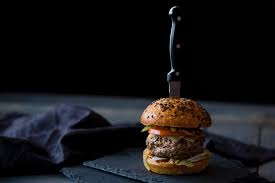
McDonald’s opened its first branch in Germany 50 years ago. Today McDonald’s is the world market leader in burger chains, with over 38,000 locations around the globe and 1,448 in Germany.
95 pfennigs. This is how much a hamburger cost when the US burger chain McDonald’s opened its first (West) German location in Munich on December 4, 1971. At that time, the menu only included cheeseburgers, french fries, Coca-Cola, soda and coffee.
Today McDonald’s is the world market leader in burger chains, with over 38,000 locations around the globe and 1,448 in Germany. And there should be even more: “We have a declared growth target for the next few years and are actively looking for new locations,” says a spokesman.
The expansion of the company also reflects the social change of the past decades. “In the seventies, interest in food and eating culture as well as international cuisine was awakened,” says Margareta Büning-Fesel, head of the Federal Center for Nutrition. “That’s why there was also a great deal of openness to fast food and ready-made meals.”
However, the change in eating habits had already started earlier. “Since the post-war period we have seen a sharp increase in sugar consumption, which came with the sugary drinks from the USA,” says Hans Hauner, head of the Else Kröner-Fresenius Center for Nutritional Medicine at the Technical University of Munich. “Another thing that is going in the wrong direction is the increase in the consumption of meat and meat products.” However, both have stagnated for a number of years or have been declining slightly.
“The proportion of fast food has increased dramatically in the past five decades,” says the scientist. “Bratwurst, doner kebab, hamburgers, pizzas, or in Bavaria also the Leberkassemmel. Only forty percent of households still cook reasonably regularly. ”One of the reasons for this is the high proportion of single households. The trend towards quick eating was boosted by another US invention that was widely used in the 1980s: “The microwave made it into German kitchens,” says Büning-Fesel.
“In the seventies, however, one can also date the beginning of a clear awareness of the issue of obesity,” says the head of the Federal Center for Nutrition. “Nutritional communication and information has become stronger. What was added in the eighties was the subject of wholefood nutrition and the environment, the muesli wave. ”
But nobody would argue that this is why healthy eating and healthy lifestyles have prevailed. “Part of the population is now less well fed than it was 50 years ago,” says nutritionist Hauner. “Many better educated people pay attention to their health and value a healthy diet. On the other hand, we have economically weaker population groups and socially disadvantaged people who often eat unhealthily. ”
The data situation on the eating habits of the population is bad, says Büning-Fesel. “It is clear that there is definitely a gap, and also nutritional poverty in Germany. There are really sections of the population who have difficulties in terms of income in buying enough food. ”
Because nutrition is also a question of money. A restaurant charges higher prices than a snack bar, high-quality, fresh food is more expensive than cheap frozen food and ready-made meals. But even in well-off families, there is less time to cook today than at the beginning of the 1970s, since both parents usually work.
The business model of system catering imported from the USA has spread across the board: “The out-of-home market was booming, and with it system catering,” says a spokeswoman for the Dehoga hotel and restaurant association on the situation before the start of the corona pandemic. “Almost every third euro was spent in a branded restaurant.”
In absolute numbers, snack bars of all kinds have expanded much faster than the self-service chains. In 2005, the Federal Statistical Office counted a total of 1,544 “self-service restaurants”; in 2019 it was already 3,790.
“In any case, there were fewer overweight people in Germany at the end of the sixties than there are today,” says Büning-Fesel. “From 1999 to 2013 the number of obese – that is, the really seriously overweight – men rose by 40 percent, among women it was 24 percent.” .
Even in a very long-term comparison, today’s Germans are presumably no better nourished than their great- and great-great-grandparents: “Before the First World War, significantly more bread and potatoes were eaten,” says nutritionist Hauner. “The bread was much coarser and richer in fiber. I do not think that the population was generally much worse fed than it is today, even if there is a wider range of food available today. “
Reviewer overview
50 Years of McDonald's in Germany - /10
Summary
McDonald's opened its first branch in Germany 50 years ago. Today McDonald's is the world market leader in burger chains, with over 38,000 locations around the globe and 1,448 in Germany.
0 Bad!