The Telecom Industry Blames European Regulation
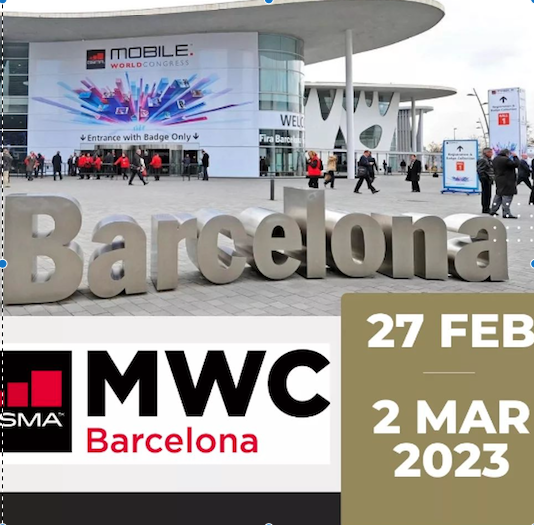
At Mobile World Congress, the telecom industry blames European regulation
At the Barcelona mobile show, the leaders of Orange, Deutsche Telekom and Ericsson called on Brussels to urgently review its policy towards the telecoms sector, under penalty of seeing it decline.
Usually, the Mobile World Congress in Barcelona is primarily the opportunity for the telecom industry to shine the spotlight on its latest innovations. But something rare, this new edition opened with a rant. Several leaders of the European cadors of the sector have publicly proclaimed their fed up with the way in which Brussels oversees their industry.
From the opening conference, Christel Heydemann, the boss of Orange, set the tone. While the European Commission is urging the telecoms industry to deploy fiber and 5G to bring one gigabit/second connectivity everywhere by 2030, the leader estimated that the sector no longer has the means. “Massive investment in networks – almost 600 billion euros in Europe over the last decade – is difficult to return, while consumers expect to pay less to get more” . She notes that “some telecommunications companies are no longer able to fully absorb these investments”. Result: “They are obliged to partially sell their current infrastructures to finance the new ones. »
In the eyes of Christel Heydemann, the culprit is “fierce competition” in telecoms, the result of “sometimes outdated regulations”. According to the leader, the policy pursued by Brussels since the liberalization of this industry at the end of the 1990s must evolve. If nothing changes, the sector goes, according to her, to the breaker. “According to consultancy PwC, 46% of CEOs of telecommunications companies think their company will not survive another decade,” she warned.
Same story for Tim Hottges, the boss of Deutsche Telekom. According to him, the European “framework” of telecoms, characterized by “a lot of regulation and competition” precipitates the decline of the sector and its “commoditization”. According to him, the time when the operators of the Old Continent were powerful enough to diversify into banking or audiovisual is over. “Today, their CEOs are happy when they have the means to finance their networks! “, he warned.
Incumbent operators are brooding
These exits come at a time when many incumbents are feeling down. In the United Kingdom, the giant Vodafone is brooding, and has begun deep restructuring. In Italy, Telecom Italia is in dire straits and is trying to sell its fixed Internet network. In Spain, the giant Telefonica is also suffering from a fierce price war… All these players must, moreover, now deal with galloping inflation and rising energy prices.
The difficulties of operators are of concern to all telecom players. This is particularly the case for equipment manufacturers, on the front line for the deployment of mobile networks. “In Europe, no operator has the means to build a 5G network, gets carried away Franck Bouetard, CEO of Ericsson France. They are all too small. If the strong competition in telecoms, desired by Brussels, has benefited consumers who benefit from low prices, it has in turn greatly weakened operators. “We have destroyed our industry and our ability to invest,” laments Franck Bouetard.
Ericsson cuts in its workforce
The manager doesn’t mince his words. It must be said that Ericsson is directly paying the price for the slowdown in the deployment of 5G in Europe. Two days before the start of the Mobile World Congress, the Swedish giant announced that it was going to ax its workforce and part with 8,500 employees.
What can be done, then, for the Europe of telecoms to regain its colours? In Barcelona, all European operators are calling in the first place for Gafa, by far the first users of their networks, to contribute to their financing. This topic is one of the big chunks of the major public consultation launched last week by the European Commission on “the future of connectivity and telecom infrastructure”.
“We need consolidation”
Operators welcome the initiative. But some call not to go through a tax, for fear of seeing this possible windfall escape them. “If the money goes through Bercy, nothing says that the operators will see the color”, sums up a good connoisseur of telecoms. This is why Christel Heydemann is campaigning for “wholesale agreements”, which digital service giants would be obliged to sign with operators if their Internet traffic exceeds a certain threshold.
At the same time, the operators want Brussels to allow the telecoms industry to consolidate. There is no more economic space, they judge, for a hundred players in Europe. “We need consolidation to generate economies of scale and continue to invest”, repeated Tim Hottges. In recent years, Margrethe Vestager, the European commissioner for competition, has often opposed deals that reduced competition in several countries, for fear that the prices of Internet subscriptions and mobile plans will soar.
Reviewer overview
The Telecom Industry Blames European Regulation - /10
Summary
0 Bad!