Liam Neeso: Finding a Reason to Get Out of Bed Every Morning is a Gift
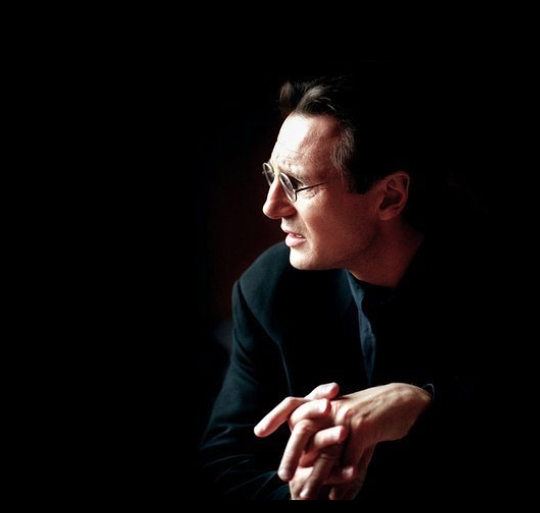
The Irish interpreter, who premieres ‘Marlowe’ today, is 70 years old but seems to have lived several lives: virtuous theater actor, ‘sex symbol’, sensitive hero and, in recent years, the victim of a duel that has become a profitable revenge in action movies.
Liam Neeson (Ballymena, Northern Ireland, 70 years old) has been compared many times to trees. His 193-centimeter height has led some journalists to refer to his wingspan as that of an oak tree, and a theater critic once described him as “a sex redwood.” In 2017 he even played a yew tree in A Monster Calls. But on a rainy morning in San Sebastian, Neeson walks into the room of the Hotel Maria Cristina with an attitude more like that of a willow tree: at the press conference to introduce Marlowe—the adaptation of the novel The Black-Eyed Blonde by 2014 in which John Banville revived the private detective that Raymond Chandler created in 1933—, a journalist has pushed him to retell the saddest moment of his life.
The question was about the Abraham Lincoln biopic that Steven Spielberg wanted Neeson to star in, but Daniel Day-Lewis ended up doing. The journalist was perhaps unaware (or perhaps perfectly aware) of the reason for that disagreement: after several years committed to the project, the script reading took place months after the death of Neeson’s wife in a ski accident and, at one point given, the actor pushed Spielberg aside and confessed that he did not feel up to the task of taking on the role. Neeson’s narration turns the Zinemaldia press conference, often a formality, into a meditation on grief. And with that frame of mind Liam Neeson sits down to give this interview.
“I’ve always wanted to play Philip Marlowe,” he admits. “I wasn’t intimidated that the character had been done before by Humphrey Bogart [in The Big Sleep] or Robert Mitchum [in Goodbye, Doll]. He knew director Neil Jordan would put his own quirky spin on it. What did intimidate me was the cast. Working again with Jessica Lange, 27 years after Rob Roy, with Diane Kruger, with Danny Huston, with Alan Cumming… But filming in Barcelona was a real pleasure”. Marlowe’s Laurel Canyon, which opened on Friday, is actually La Floresta, the bourgeois neighborhood of Barcelona built on a mountain in the Collserola mountain range. The cinematographer is Xavi Gimenez and at the press conference, Marlowe’s producer points out that the film’s credits are full of Spanish names. “Catalans”, corrects Neeson, who was born in Ballymena, a working-class town in Northern Ireland.
These origins marked the attitude with which Neeson faced his trade. “I like to work. I love having a reason to get up in the morning since 1976, January 26, 1976. I always tell my children that finding a reason to get out of bed every morning, no matter what it is, is a gift to everyone else. of his life,” he says. A part of him has always felt that he was derailed from his destiny, that today he should be working in a factory in Belfast. Neeson grew up in a women’s home, with three sisters and a father who “never used five words if he could say it in two.” He was first a boy as an altar boy, which left him with a passion for the theatricality of the liturgy and for phonetically learning Latin masses. Later he was a teenage boxer, which left him with a broken nose for life. And his artistic vocation came to him when he discovered that being an actor would allow him to access his emotions in a way he had never been taught to do at home.
Among British and Irish actors there is a custom: behave as if his jump to Hollywood, after an inevitable stage in the theaters of his country, had happened by chance. In British society, ambition is frowned upon, considered in bad taste, especially when it comes to making it in a place as frivolous as Hollywood. But Liam Neeson doesn’t. He was always honest in his claim: he moved to Los Angeles in the early eighties because he wanted to see his face on the biggest screen possible. The epiphany occurred when he stayed in a luxury hotel in Miami during the filming of The Mission, he turned on the TV and saw his face in a chapter of Miami Vice in which he played an IRA terrorist. Here I am, he told himself. “This is my spot”.
Hollywood opened its doors to him, yes, but he assigned her a role that he did not expect: that of a sex symbol. In eighties thrillers like Suspect (1987), The Price of Passion (1988) or The Silence of Suspicion (1991) he played sensitive and seductive men who led the female star (Cher, Diane Keaton, Laura San Giacomo) to fly off the handle. Movieline magazine said of Neeson that he transmitted “a kind and humanized expansion of male sexuality”, and the tabloids took a liking to comment on, as they said at the time, “his conquests”: Helen Mirren, Julia Roberts, Cher, Brooke Shields, Jennifer Grey, Sinead O’Connor and even Barbra Streisand. His status as a leading man generated more headlines than his movies. At that time, actress Dana Delany’s joke that “if you put Liam Neeson, James Woods and Willem Dafoe in one room, there would be no room for anyone else” became popular. Neeson’s public image was so associated with sex that Woody Allen parodied it in Husbands and Wives (1992) and Whoopi Goldberg introduced him at the 1999 Oscars as he caressed the microphone with both hands up and down.
Neeson was particularly struck by the definition of “sex redwood” given to him by The New Yorker critic in 1992. “It was because of a play I did for Eugene O’Neill, Anna Christie, in which I met my wife . I read that review and thought, ‘How elegant!’ I loved. It’s not that I saw myself that way… But for the character I was playing I had a definite idea of the entrance I should be making, it was a half-naked man coming home after being at sea for weeks.” Explain. The producer of the play said that he gave him the role because he had the appearance of a man who could seduce all the women in the world, but fall in love with only one.
Natasha Richardson, her partner in Anna Christie, was married when they met and even so she did not try to romanticize the infidelity: she confessed that first there was sex and then, much later, love came. She was British theater royalty, the daughter of Tony Richardson and Vanessa Redgrave, and he the son of an Irish janitor. When they got married, Vanity Fair resorted to an iconic quip Katharine Hepburn said back in her day about the artistic couple of Fred Astaire and Ginger Rogers, but reversing the genders: “She gives him class, he gives her sex.” After one of the performances of Anna Christie, Steven Spielberg knocked on his dressing room door. He wanted to greet him and introduce him to his mother-in-law, who was still crying after seeing the play. Neeson held her close and comforted her for several minutes. Spielberg knew that he had found his Oskar Schindler.
Spielberg had considered giving the role of the businessman who saved the lives of 1,200 Jews by hiring them in his factories during World War II to Harrison Ford and Kevin Costner, but he feared that a star would distract the audience from what was truly important. “At first I thought we were making a small movie,” Neeson recalls of Schindler’s List. “Steven wanted to tell this story. The script was fantastic, it took him 10 years to get it filmed and during that decade he didn’t change a single comma. Then the movie came out and took on a life of its own. He still has it, they put it in schools and universities as part of the agenda. And then there was an effect, as if I entered another division where they offered me more leading roles, which was fantastic.
Neeson became a Hollywood star, which he is grateful for when it happened at age 41 “and not at 19.” “My life didn’t change. I already had a clear idea of who I am, who I was, I’m glad I wasn’t a kid, ”he says. This maturity, he admits, led him to face his power in Hollywood with a certain sense of responsibility. “I wanted to play old-fashioned heroic characters, like the ones I grew up with in movies. Men who represented something, represented essential ethical principles, the difference between good and evil, ”he says regarding roles like Michael Collins (1996) or Rob Roy (1995). “I still like them. When I read a script, I still like to find leading characters who are noble. It doesn’t have to be black or white, they may have flaws, but they are on a mission, a truth, a justice. I like that kind of Arthurian Knights of the Round Table. They fight for something. And I feel like we need it more than ever.” The public may be more cynical now than in those nineties. “I agree. All the more reason to play those kinds of characters,” he adds.
Neeson seemed destined to grow old on film playing priests, monks and mentors: Gangs of New York (2002), Kingdom of Heaven (2005), Batman Begins (2005). Until in 2009 his life and professional career took a violent turn. In January he released Revenge: “A Little Career Detour I Was Convinced Would Go Direct-to-DVD,” about a former CIA agent who travels to Paris to rescue his kidnapped teenage daughter. The film ended up multiplying its budget of 25 million euros by 10. Neeson undoubtedly contributed to that success: few actors could pull off the now iconic “I have a certain set of skills” monologue without making it laughable. In March 2009, in the midst of the success of Vengeance, his wife called him to tell him that she had fallen while skiing and that she was fine, although a little dizzy. The next day, Richardson slipped into a coma. Neeson flew to the hospital and no one would let him in until a nurse recognized his movie star face. Richardson would not come back from his coma. He passed away on March 19, 2009.
To face the duel, Neeson embarked on one of the most surprising third acts in Hollywood: in 12 years he has shot 41 films, 17 of which are low-budget projects in which the protagonist takes revenge on some criminals who have gotten into with the wrong old man. With Vengeance a film subgenre was born about avengers who take the law into their own hands in the best tradition of Charles Bronson’s I am justice (1982). Liam Neeson’s film receives titles such as One Night to Survive, Walking Among the Graves or White Hell. The subgenre has made him a millionaire and, incidentally, has given work to all his generation mates: a Liam Neeson film can star Pierce Brosnan, Denzel Washington or Sean Penn.
Liam Neeson doesn’t seem happy, but he does seem at peace. About to turn 71, he has not drunk or smoked for 10 years, two things he did constantly during the previous 40 years (“Ewan [McGregor] called me Qui-Gon Gin,” he reveals, referring to the volume of alcohol he drank when he filmed The Ghost menace). But he confesses that he is at an age in which one looks more to the past than to the future. What comes to mind when he thinks of his long career? Neeson spends a few seconds in silence before answering. “There is a part of me that feels like Anthony Hopkins. Every time I see him I give him a hug and he said: ‘How are you doing, Tony?’ And he always answers the same thing: ‘Fantastic. They haven’t discovered me yet. And then there’s another part of me that feels like, yeah… that he’s been a good… I like the craft of acting. I like to see a scene of mine and think: ‘That worked for me, that worked. I have had a good life”, he concludes before correcting himself: “I am having a good life”.