Russian Ciant Sberbank in Croatia, Slovenia to be Sold to Local Banks
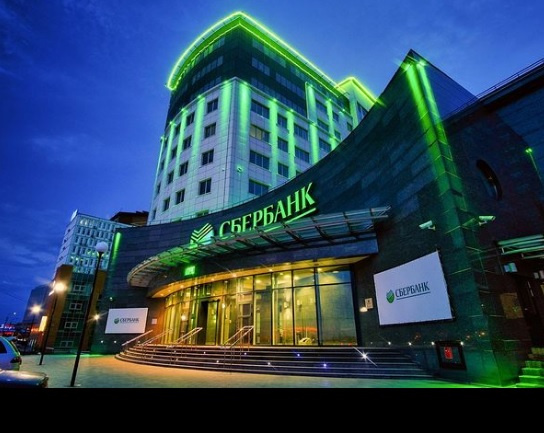
After a few days ago the ECB ruled that the Austrian-registered subsidiary of Russia’s largest state institution, Sberbank, had become “problematic “, and today it was decided to proceed with its liquidation. The reason for this is serious outflow of deposits and deterioration of liquidity after Russia’s invasion of Ukraine and sanctions against Russian banks. According to the decision of the European Single Board for Restructuring Sberbank, Europe is not critical to the banking system in the country and therefore does not need to be restructured.
“Today we acted to protect the public interest and ensure financial stability. All this was achieved without using public funds, so not only Sberbank‘s customers are protected, but also taxpayers. It was a complex cross-border group and there was great cooperation between authorities at European and national level, which is even more vital in these times, “Council President Elke Koenig said in an official statement.
According to Elke Koenig‘s Unified Restructuring Council, the liquidation of the Austrian-registered bank does not threaten the country’s financial system.
The decision means that the Austrian financial regulator will take the necessary liquidation actions in the coming days, and its depositors will be able to receive up to 100 thousand euros from the local deposit guarantee scheme. Payment must begin within ten business days at the latest. A similar fate awaits the clients of its subsidiary bank in the Czech Republic, which is not part of the banking union and the decisions are made by the local central bank.
At the same time, several of the other branches of Sberbank will continue to exist and will be able to open and function normally tomorrow. For the bank in Slovenia, it was decided to transfer it to Nova Ljubljanska Banka, and for the one in Croatia – to Hrvatska Postanska Banka. According to European rules, the restructuring institution has the right to such a decision, for which purpose it must assess the troubled bank and offer it for purchase to suitable market participants. The price was not announced, but Koenig, in response to questions from the media, explained that more than one offer had been received and the transfer was not gratuitous, but a positive price.
The reason for the different treatment is that for both divisions the restructuring was considered to be in the public interest and without it it could have negative consequences for the financial systems of Slovenia and Croatia. The total assets of Sberbank Europe are 13-14 billion euros, and in Austria, Slovenia and Croatia they are about 2 billion euros, which makes it a small institution in the first country, but relatively significant in the other two.
Both buyer banks have significant state influence in them. Nova Ljubljanska Banka was nationalized after the global financial crisis due to its losses from bad loans and now the state has a residual share of 25%. In Hrvatska Poštanska Banka, the state directly holds 45% of the capital, but is indirectly the majority owner with a 75% share.
There was a last-minute salvation for the Serbian Sberbank. It was dealt with last autumn to be sold to AIK Bank, and on the day the ECB declared the Russian bank problematic, it was announced that the sale was finalized. It is now part of a banking group controlled by Serbia’s second-richest, Miodrag Kostic. Following the deal, AIK is adding about 1.7 billion euros to its assets, which will reach nearly 4 billion euros. This puts it in sixth place in the market with about 9% share.
In the two smaller banks in Bosnia and Republika Srpska, control is taken directly by state agencies. So far, there is no clearer solution only in Hungary, where withdrawal restrictions have been extended by 30 days and the central bank has appointed a conservator to manage it. According to information from portfolio.hu, citing the Hungarian central bank, attempts have been made to stabilize the local Sberbank, but liquidation is underway there as well.
Reviewer overview
Russian Ciant in Croatia, Slovenia to be Sold to Local Banks - /10
Summary
0 Bad!