Explosive Demand in Three Major Sectors Expected to Boost Taiwan Stock Market’s Continued Success
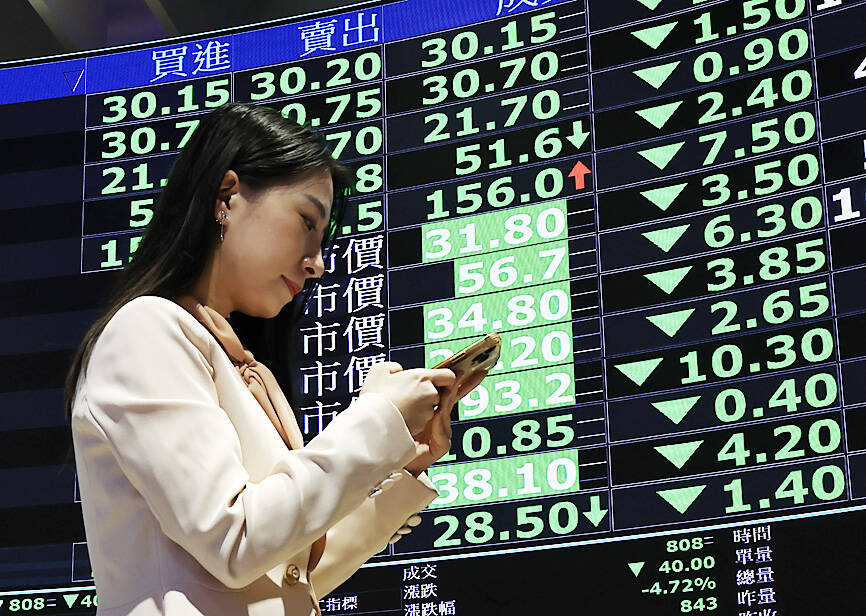
The supercycle triggered by the AI wave has helped Taiwan’s exports reach record highs this year, and the Taiwan stock market has followed suit with a dramatic V-shaped recovery. Looking ahead to the first quarter of next year, the Taiwan Stock Exchange’s research team at Uni-President Investment Trust believes that, benefiting from interest rate cuts and a surge in AI demand, the Taiwan Stock Exchange Weighted Index (TWSE) has the potential to continue challenging new highs. In terms of industries, they are optimistic about AI server upgrades, which are expected to bring leapfrog growth opportunities to three major sectors: AI ASICs, thermal management, and PCB/CCL. However, they must still be aware of remaining market headwinds, including potential slowdowns in growth data due to a high base, and uncertainties arising from trade protectionism and geopolitical conflicts, all of which could cause occasional fluctuations in the global economic upswing.
The biggest shock to the investment market in 2025 will undoubtedly be Trump’s tariff policies. However, thanks to the surge in AI demand and the dramatic shift in tariff policy, the TWSE Weighted Index rebounded rapidly after hitting its lowest point on April 9th, recovering by as much as 60% by early December—a level of volatility rarely seen in history. Entering the first quarter of next year, the performance of the Taiwan stock market will continue to be closely linked to the US economy. The US economy is driven by three main factors: First, the rapid growth of investment by tech giants will make a substantial contribution to GDP; second, fiscally, tariff revenues will stabilize the fiscal deficit, and the tax cuts under the “Big America” bill will positively boost US corporate investment and private consumption; third, the cycle of interest rate cuts will support a high stock market valuation, and a weak dollar will further enhance the overseas profits of US companies.
In Taiwan, the Uni-President Investment Trust’s Taiwan Stock Research Team stated that considering the continued acceleration of the AI industry’s growth, they predict that Taiwanese companies’ profits are likely to achieve double-digit growth again next year. The Taiwan stock market’s performance has historically shown a strong positive correlation with corporate profitability; therefore, they are optimistic about the Taiwan stock market next year, not only because of its sound fundamentals, but also because the weighted index has a significant chance of reaching new highs.
Regarding specific industry momentum, the Uni-President Investment Trust’s Taiwan Stock Research Team is optimistic that with the continuous innovation of AI servers, not only will the market size grow significantly, but it will also create investment opportunities for the upgrading of peripheral components. In the AI server sector, NVIDIA’s GB series server shipments are expected to double next year compared to 2025. Simultaneously, the rise of self-developed chips will usher in mass production of ASICs. Both the production of the GB series and AI ASICs will rely on Taiwanese manufacturers with advanced CoWoS packaging capacity, and their profitability is expected to improve further.
The upgrade of AI servers also brings new industry investment opportunities. The increased usage and specifications of PCBs and substrates will not only boost demand for high-end CCL (copper foil substrate) products, but the heat dissipation industry will also play a crucial role. The Uni-President Investment Trust Taiwan Stock Research Team estimates that the market size for air cooling, liquid cooling, and immersion cooling all have the potential to achieve double-digit compound annual growth rates; among these, the demand momentum and growth rate of the liquid cooling market will be the most significant.
Furthermore, even though humanoid robots are still some distance from mass production, the Uni-President Securities Investment Trust Taiwan Stock Research Team remains optimistic that humanoid robots will become an important new blue ocean for technological applications in the future. Related components include battery packs, heat dissipation, carbon fiber, communication, and sensing systems, as well as precision machinery such as linear/rotary actuator modules used to improve the stability of robot walking. All of these could become new development opportunities for Taiwanese manufacturers.