Banxico Raises Interest Rate to 8.5%, the Highest Level in its History
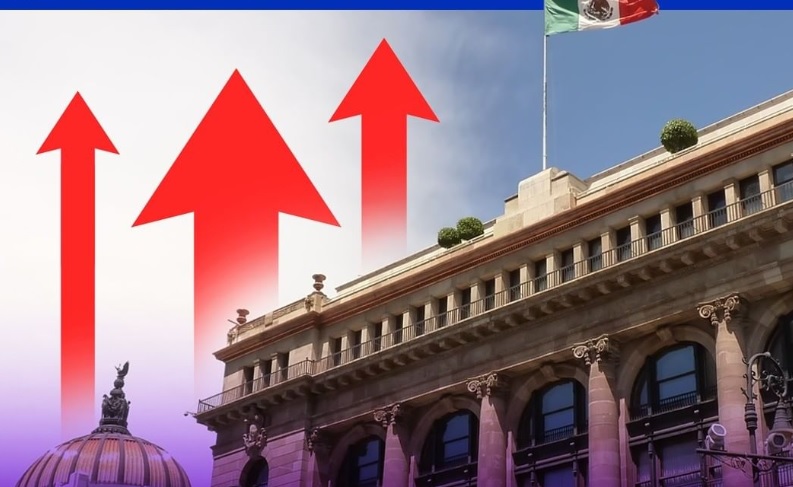
The Bank of Mexico (Banxico), headed by Galia Borja Gómez, raised the reference interest rate by 75 basis points, going from 7.75 to 8.5 percent, in an environment in which general inflation exceeds an annual rate of 8.15 percent. This is its highest level since 2008 when Banxico took the rate as a target. In addition, it is the second increase in the reference interest rate of this magnitude and the tenth in a row. According to Banxico’s minutes, the Governing Board decided to increase the target for the interbank interest rate in a context in which world economic activity weakened during the second quarter and timely indicators suggest that this would continue in the third quarter.
“Global inflation continued to rise, in some cases once again reaching its highest level in decades, in an environment where imbalances between demand and supply persist in various markets and food and energy prices are still high,” he said. In addition, he referred that the accumulated inflationary pressures derived from the pandemic and the war in Eastern Europe continue to affect general and underlying inflation (which excludes prices of more volatile goods and services, such as agricultural and energy), which in July registered annual rates of 8.15 and 7.65 percent, respectively, remaining at levels not seen in two decades. Other elements that the Governing Board considered to raise the interest rate was the fact that the United States Federal Reserve increased the target range for the federal funds rate by 75 basis points for the second consecutive time and anticipated future increases. Inflation forecasts In this context, the forecasts for headline and core inflation in Mexico were revised upwards until the third quarter of 2023, although convergence to the 3 percent target is still expected to be reached in the first quarter of 2023. 2024.
Banxico estimates that in the third quarter of 2022, general inflation will reach an annual rate of 8.5 percent, it is expected to drop to 8.1 percent in the fourth quarter and in the first quarter of 2024, after gradually decreasing, it will reach 3.1 percent. Inflation risks The Governing Board warned that these projections are subject to risks such as: persistence of underlying inflation at high levels; external inflationary pressures derived from the pandemic; that the pressures on agricultural and energy prices continue due to the geopolitical conflict; exchange depreciation; and cost pressures. At the global level, the risks associated with the pandemic, the prolongation of inflationary pressures, the worsening of geopolitical tensions and greater adjustments to economic, monetary and financial conditions stand out.
,Economic activity The central bank highlighted that the timely information indicates that in the second quarter of 2022 the national economic activity advanced at a similar rate to that of the previous quarter, continuing with a gradual recovery, while the slack conditions were reduced. However, an uncertain environment remains, with a balance of risks biased downwards. Globally, economic activity weakened during the second quarter and timely indicators suggest this will continue into the third quarter.