Deutsche Telekom Boss Threatens to Shift Investments Abroad
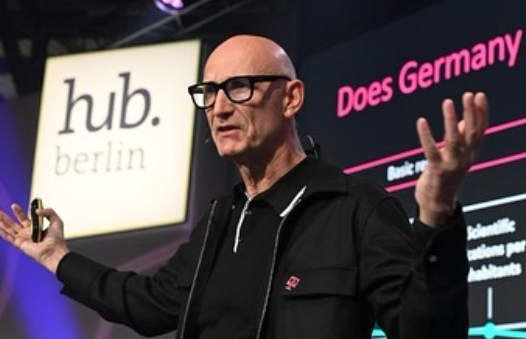
One still invests “patriotically”, said the Telekom boss Tim Hottges. But the conditions in this country are bad, also because of low prices. Investments abroad could be more worthwhile.
Chairman of the Board of Management of Deutsche Telekom boss Tim Hottges has warned federal politicians against choking off the investments required for digitization with the wrong rules. “If the general conditions do not change, we will see ourselves forced to make even greater use of our opportunities abroad, particularly in the USA,” said the CEO in Bonn. In the US, sales per customer in the telecommunications industry are three times higher than in Germany. According to Hottges, investments here are hardly worthwhile, also because the prices for telecommunications services are low.
Telekom is currently spending billions to lay fiber optics in the German fixed network and expand the 5G cell phone network. However, the Bonn group’s source of income is the American subsidiary T-Mobile US. One still invests “patriotically”, said Hottges with regard to domestic investments. “But we can only do that because we have the balance sheet of our American business behind us – we wouldn’t be able to invest as much if we didn’t have the enormous cash flow and enormous financial strength from the USA.”
Criticism of the auction of mobile phone frequencies
Hottges made it clear that domestic investments could change course. “We have to look at the numbers very soberly – we are a company and it’s not about making patriotic decisions.” Rather, one must justify investment decisions to shareholders.
Hottges’ criticism refers, among other things, to the common practice that the Federal Republic auctions mobile radio frequencies every four to five years and the network operators pay billions for this. “We regulate completely without addressing the issues.” Instead of providing the right framework for good network expansion, the state organizes “artificial auctions that devour a lot of money, which then disappears somewhere in the state coffers, but not in the infrastructure”.
With the advancing digitization, the requirements for many jobs have changed. The required skills are much more far-reaching than those that would be taught in pure “IT training”. Upskilling plays this role.
The next mobile phone auction will probably take place in the coming year. However, it is possible that there will be no auction this time, but that frequencies will be allocated and the companies will commit themselves to ambitious expansion requirements. The forthcoming award could also result in a so-called service provider obligation, in which mobile phone companies without their own network – such as Freenet – get access to the established networks.
Such a regulation, which is seen mostly positively in federal politics and could therefore boost competition, is a red rag for the manager. According to Hottges, there should be free negotiations, but no compulsion to open up the network.
The service provider obligation would have negative consequences for the expansion intensity in Germany, the company boss warned. According to his description, the high investments in the network would be devalued if the competition could boast the same network on the market. The network operator would get rent, but according to Hottges it would be too low. “It’s not good for the market as a whole, it’s only good for the service provider.”
Reviewer overview
Deutsche Telekom Boss Threatens to Shift Investments Abroad - /10
Summary
One still invests "patriotically", said the Telekom boss Tim Hottges. But the conditions in this country are bad, also because of low prices. Investments abroad could be more worthwhile.
0 Bad!