U.S. job Vacancies are Close to Historical Highs

US vacancies jumped to the second highest position on record in October, and US companies continue to face challenges in finding qualified employees.
On Wednesday (December 8), the results of the Job Vacancies and Labor Flow Survey (JOLTS) of the Ministry of Labor showed that the number of job vacancies in October rose from 10.6 million in September to 11 million, higher than the 10.5 million predicted by economists. There has been an increase in vacancies in the accommodation and catering industry, manufacturing and education industries.
However, the resignation rate fell from a record 3% last month to 2.8%, the first drop since May, indicating that companies have made some progress in retaining workers. Among them, the number of resignations in the transportation and warehousing, financial and entertainment industries declined.
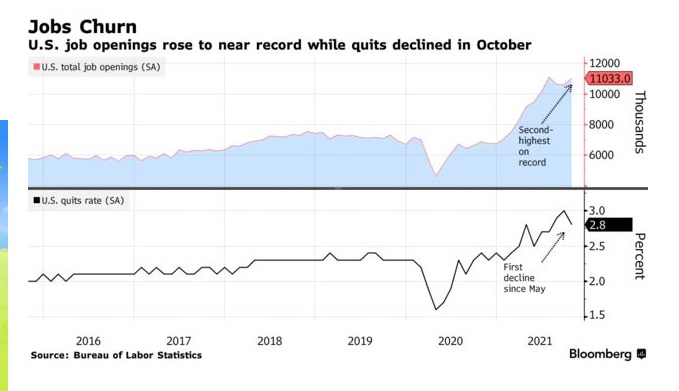
The increase in job vacancies shows that despite the higher wages and bonuses, companies still have difficulty filling jobs, and it may take some time for the labor supply to meet demand. At the same time, the newly emerging Omi Keron strain has caused public health problems and complicated the situation of childcare.
Normally, the number of unemployed and the number of job vacancies are relatively close. However, data from the Bureau of Labor Statistics show that 7.4 million Americans were unemployed in October, far below the total number of job vacancies, which means that millions of Americans temporarily chose not to join the employment force.
The JOLTS report is usually one month behind the non-agricultural employment report. The non-agricultural employment announced last week showed that the non-agricultural employment population increased by only 210,000 in November, the smallest monthly increase this year. However, the labor force participation rate has risen to the highest point since the outbreak of the new crown pandemic, which indicates that the recruitment difficulties of companies may ease in the coming months.
Some Fed officials believe that the non-agricultural report in November is actually much better than the number on the surface (210,000 people added). Some of the FOMC vote committees believe that the Fed has enough necessity to accelerate the reduction of the scale of bond purchases (Taper). Pace, and a more open attitude towards raising interest rates.