How your Mood Affects your Skin
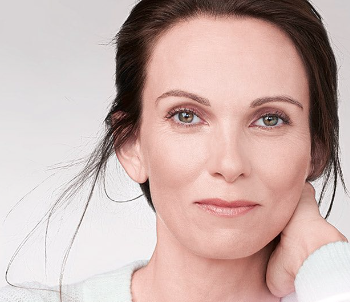
Mood is closely related to emotions, and emotions can have an important impact on our physiological mechanisms.
The skin is the outermost layer of the body, but it is closely related to emotions. Emotional changes often affect the skin and expression, as the saying goes: “Change with the heart”. For example: a person is always in a happy, calm, and kind mood, his complexion is ruddy and shiny, and skin diseases rarely occur. This is because a good mood will coordinate Qi and blood, make the neuroendocrine system function normally, and make the blood flow of the face and the whole body smooth. Therefore, people’s appearance and whole body skin just appear healthy and beautiful. So: a good mood is the best beauty and skin care agent, more effective than any cosmetics and drugs.
On the contrary, long-term unpleasant emotions, such as tension, anger, low self-esteem, depression, anxiety, etc., will interfere with the cerebral cortex, autonomic nerves, endocrine system, and immune system, thereby affecting the functions of the whole body. In terms of appearance and skin appearance, it shows haggard and old appearance, and skin diseases such as facial chloasma, acne, eczema, atopic dermatitis, alopecia areata, hair loss, urticaria, psoriasis, and rosacea. Animal experiments have also confirmed that rats are allowed to live in an unstable environment, causing tension and panic. As a result, in addition to typical neurological symptoms, the rats also appear haggard, dull, dry skin, and easy to shed hair. , dermatitis and other phenomena. Therefore, negative emotions are one of the important factors of aging appearance and various skin diseases. To maintain the beauty of the appearance and the health of the skin, a good mood is the most important thing, which is also the truth of “a wide heart makes a person beautiful”. Section 5 Emotion and Diet, Exercise, Sleep 1. Emotion and Diet The nutritional status of a person depends not only on what he eats, but also on what he absorbs. As the saying goes: “Eating with a good mood is better than delicious food.” This shows that the mood when eating directly affects health.
If you can maintain a relaxed and happy mood while eating, you can moderately excite the central nervous system and parasympathetic nerves. At this time, gastrointestinal peristalsis and gallbladder contraction will be strengthened, which is beneficial to the digestion and absorption of food and the health of various organs.
When you are in a bad mood, the digestive system is the most obvious and fastest affected. People often have no appetite or loss of appetite due to bad emotions. Even if they eat reluctantly, eating is uncomfortable and can induce some diseases. This is because when the mood is bad, the gastrointestinal function is disturbed and the secretion of digestive juice is reduced. Therefore, you should be good at adjusting yourself when eating, and eat with a calm and happy attitude.
When the body is in a good mental state, its skin’s reaction to allergens is reduced. After watching humorous comedy programs, the skin’s sensitivity to dust mites and pollen was significantly reduced; while watching boring programs about the weather, the skin’s sensitivity to allergens did not change. After being mentally stimulated, the level of steroid hormones in the blood and the number of lymphocytes are increased dozens of times, and the degree of increase of both is proportional to the degree of stimulation.
The development of the skin and the nervous system are derived from the embryonic ectoderm, and they share several hormones, neurotransmitters and receptors, which determines that the psychology and the skin have multiple forms of intrinsic organic nature at the macroscopic and microscopic levels. connect.
The field of psychodermatology deals with the different ways in which psychological problems are linked to skin problems. Some mentally ill patients have skin conditions such as severe psoriasis or eczema or hair loss, and skin problems trigger or exacerbate their psychological problems such as social anxiety or depression. Some experts who treat mental problems find that the patient’s psychological problems have manifested through skin problems, such as hair pulling, skin scratching or recurrent diseases in other body parts. Some doctors may also encounter patients with skin-related delusions, such as delusional parasitosis. Such patients insist that their skin is infested with mites, fleas, or other microbes, which is often not the case.
Some experts in the treatment of mental problems found that the psychological problems of patients have been manifested through skin problems. picture
Most people with psoriasis face considerable emotional stress.
The roughly 7.5 million Americans with psoriasis will tell you that stress has the potential to make the condition worse. Some recent studies have also confirmed this point. Studies have found that most people with psoriasis face considerable emotional stress. Not diet, not the weather, not medications or infections, emotional stress is the number one trigger for their skin problems. Richard Granstein, a psychiatrist at Weill Cornell Medicine, told me: “I think dermatologists have long accepted that skin problems and psychological problems are closely intertwined. Often times. Now The difference is that there is finally a scientific basis to help people understand how the brain affects the skin.”
Maybe your understanding of the body and stress is the same as when I first got into psychodermatology, thinking that it has to do with something, like cortisol or something. Granstein’s experimental team found that cortisol was a key factor, but they also studied how specific immune cells respond to stressors. In response to stress, “the body releases some neurohormones like cortisol, which may cause the cells to secrete other substances that make the blood vessels dilate or widen, so there’s a problem,” Granstein explains, and the skin breaks out. Redness and swelling. In other words, if the reason for your frequent recurrence of skin inflammation is genetic, such as acne, eczema or psoriasis, cortisol may be the cause of the recurrence of skin disease.
İnstead of looking at the cortisol response, however, the latest research has instead looked at the specific types of immune cells that respond to stress. For example, the study will collect some “Langerhans cells” (Langerhans cells), immature dendritic cells located in the superficial skin, which are the mediators of the nervous system and immune system. Langerhans cells in psoriasis patients leave the superficial skin to show the symptoms of psoriasis: scaly plaques appear on the body surface. Research suggests that stress may induce this movement of Langerhans cells.
In a recent experiment, scientists gave study subjects the Trier Social Stress Test, a somewhat unpleasant test for participants. It requires participants to prepare and deliver a short speech while a group of strangers stare blankly and pass judgment. The test has been shown to actually be stressful for participants. In the study, Langerhans cells in the superficial layers of the participants’ skin decreased after the Trier test. We have not proven that this is the pathogenesis of skin inflammation such as psoriasis, but we do not rule it out.
Other studies have focused on mast cells, which are also involved in skin inflammation. The journal Nature reported in 2012 that researchers observed a vicious cycle of stress and psoriasis: “Stress causes nerves to release substances that activate mast cells, which promote the growth of more nerve fibers, which in turn release More molecules that activate mast cells.” This vicious cycle is very similar to the psycho-skin problem we discussed: stress causes skin problems, skin problems lead to more stress, and so on.
GIF cover
Therefore, the skin is closely related to our emotions and moods. If we are in a bad mood, it will show on our skin, and when we see it, we will feel even worse
Try to adjust your emotions and mood, because it is the mechanism of our own brain, and it is controllable to a certain extent. If it doesn’t work, watching comedy movies and listening to cross talk will relieve a little bit. In short, just find a way to make yourself happy Get up and let the bad mood go away from you. The skin will also get better!
Reviewer overview
Mood is closely related to emotions, and emotions can have an important impact on our physiological mechanisms. - /10
Summary
The skin is the outermost layer of the body, but it is closely related to emotions. Emotional changes often affect the skin and expression, as the saying goes: "Change with the heart".
0 Bad!