Shanghai Cultivates its Qipao Dress Icon of The Roaring Twenties
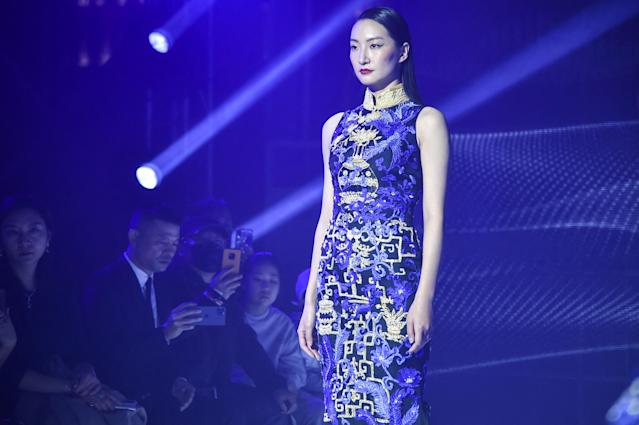
It’s an outfit forever associated with 1920s Shanghai, when the Chinese metropolis thought it was “the Paris of the Orient.” One hundred years later, the traditional qipao dress is seeking a new lease of life on the banks of the Huangpu.
The elegant outfit with a high collar and split petticoat can easily cost 4,500 euros when it leaves the workshop of Zhou Zhuguang, co-founder of Hanart, a house specializing in high-end qipao.
“Even I would prefer them to be cheaper,” admits the couturier. “But it’s an art… some of our tailors spend a lifetime learning how to make qipao.”
The narrow dress, whose name is pronounced “chi-pao”, had embodied the liberation of women in the hectic Shanghai of the 1920s, after the end of the Manchurian Empire and bound feet.
It will not survive the coming to power of the Communist prudes in 1949. Considered bourgeois and decadent, the qipao must hide. It will return to center stage thanks to the reforms and the phenomenal wealth of the Chinese economic capital at the end of the 20th century.
Produced in the chain, it is sometimes sold in supermarkets for barely 100 yuan (15 euros). It is commonly encountered at weddings or official receptions.
But Mr. Zhou found an outlet on the luxury side, resorting to expensive materials and elaborate designs. At a show late last year, he presented modernized versions of the traditional dress, adding imported elements such as lace, fringe, velvet, sequins or embroidery.
“What I want is for more young women to wear the qipao”, explains the 59-year-old stylist.
From her specialized store, Yang Zhenzhen, 28, tries to interest people of her generation in traditional clothing via her online sales site, where she plays the role of “influencer”. His shop targets 25-45 year olds, with models that start at around 550 euros.
“Young people bring new life and energy,” says Ms. Yang, who fell in love with qipao as a child and started collecting them five years ago.
“If young people don’t wear them today, no one will wear them when they are old,” she said. However, the qipao suffers from a prejudice according to which it is above all an old lady’s dress.
“There are deep-rooted misconceptions. What I’m trying to do is convince people of the real meaning of the qipao” and all the freedom that came with it in the 1920s.
Reviewer overview
Shanghai Cultivates its Qipao Dress Icon of The Roaring Twenties - /10
Summary
It's an outfit forever associated with 1920s Shanghai, when the Chinese metropolis thought it was "the Paris of the Orient." One hundred years later, the traditional qipao dress is seeking a new lease of life on the banks of the Huangpu.
0 Bad!